Posts Tagged ‘David Allen’

REUNION

Posted: April 10, 2014 in Poetry, Uncategorized
Tags: , , , , ,

Sailorz 001

PREPARING FOR THE REUNION

This will be strange.
Forty-six years after
Giving my last salute
On the quarterdeck,
I am embarking
On a road cruise
Back to the scene
Of many crimes –
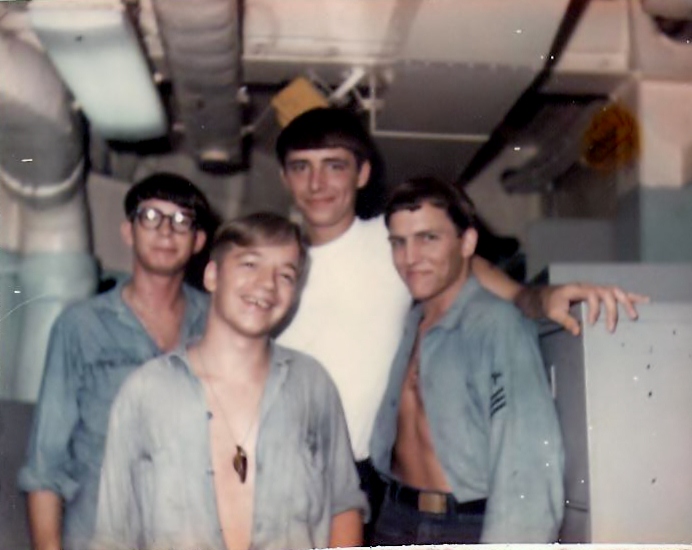
A reunion with shipmates
Far removed from the
Liberty calls of our youth.

What should I pack?
And what should
I leave behind?

Old pictures, for sure;
Salty sailors on the fantail
Sipping coffee,
Sharing the scuttlebutt;
Rum and coke sodden smiles
Grouped around a bottle-laden
Table at the Lucky Seven,
The warm tropical air
Of Old San Juan
Still soothes my soul.

And look, here’s a picture
Of me astride a pony
In a Panama City park,
Taken the same day
During a train ride back
To the ship when one of
Our drunken crew
Showed us how the whore
At some mildewed club
Showed us how to
Smoke a cigarette with her ass
And we pushed him
Into the next car, filled
With officers and
Panamanian locals.

I might also take
The two pieces of my uniform
That survived the years.
The stained white short-sleeved blouse
(we didn’t call the shirts)
I wore on liberty –
A good two sizes too small
For me now –
And the shiny silver ship’s
Belt buckle I still
Wear with my jeans.

But what should I share
About the after-life?

Would they be offended
By my anti-war work?
The 36-year adventure
As a journalist, the last
Nineteen covering
The misdeeds of American
Servicemen on the islands
Of Guam and Okinawa?

I’m not sure.

And maybe I should
Omit the stories of the Glebe,
Communal days in Northern Virginia,
LSD parties in the pasture,
Scaring the cattle and
Daffodil, my goat.
I am sure tales of the broken
Marriage and custody wars,
The frustrated years
Raising preschool kids
On my own, and the joyous
Later times spoiling
Their children, would ring
Familiar bells.

But I wonder what they’d think
Of open mic poetry nights
In the Gate Two Street bars
Outside the sprawling air base
On Okinawa?
(I did write poems back
In the sailing days,
But shared them
With a select few.)

I don’t know,
It’s hard to say how
This reunion will play out.
Will it reunite, rekindle
Old friendships?
Or underline why we
All went our separate,
Different ways,
Once I left the Grey Lady,
Striding down the gangplank,
Seabag over my shoulder,
Smiling as the quarterdeck bell
Rang and the Officer of the Deck
Proclaimed, “David Allen,
Departing.”

By David Allen
February 2014

NOTE: This is a poem I wrote when Last Stanza leader Jenny Anderson Kalahar said we should get ready to resume our biweekly poetry meetings and suggested we write a poem about reunions — since Last Stanza has been on a one-year hiatus, primarily due to my confrontation with cancer. We haven’t set meeting dates yet, but here’s my poem.
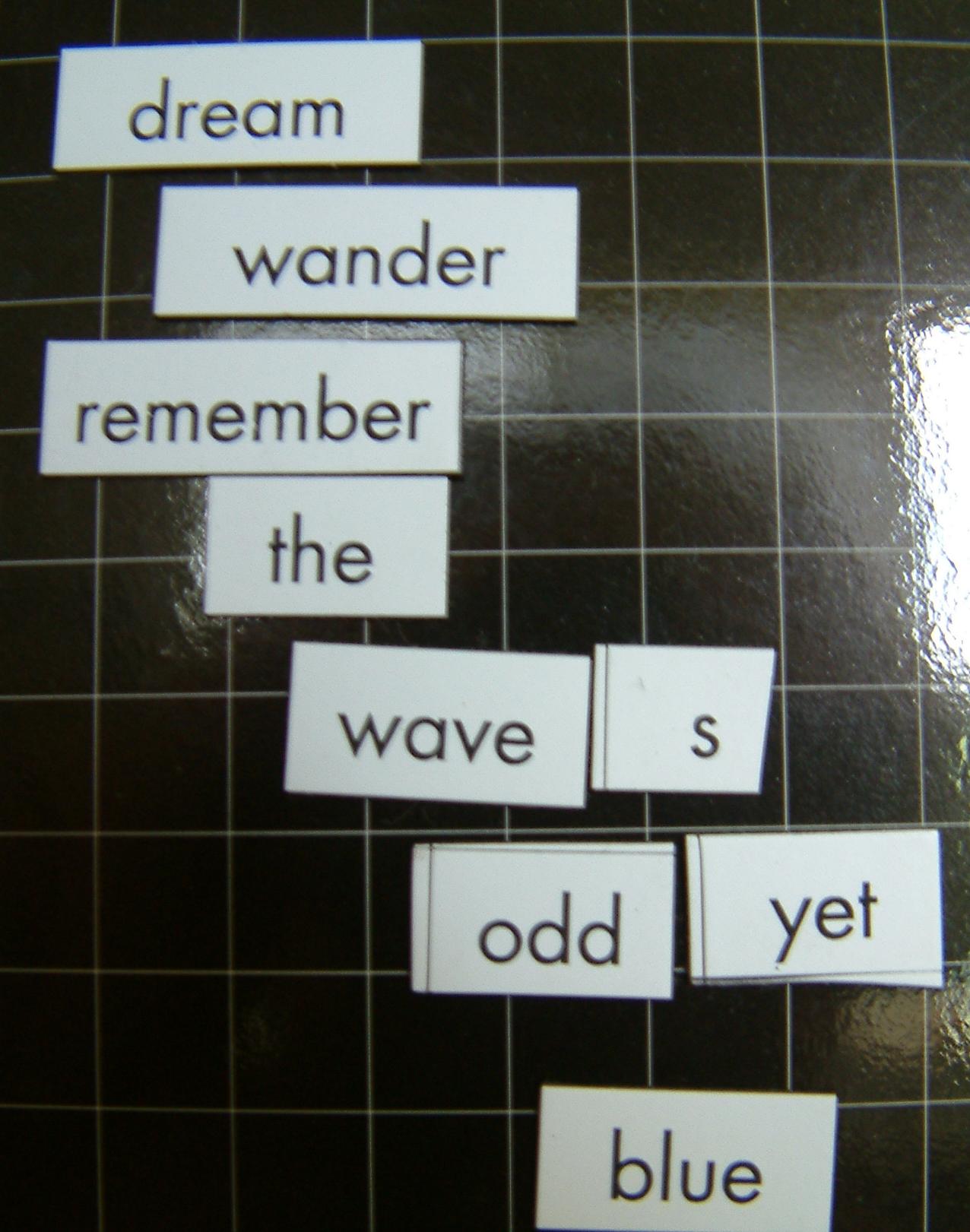
MAG 3

MAG 5

MAG 6

MAG 7

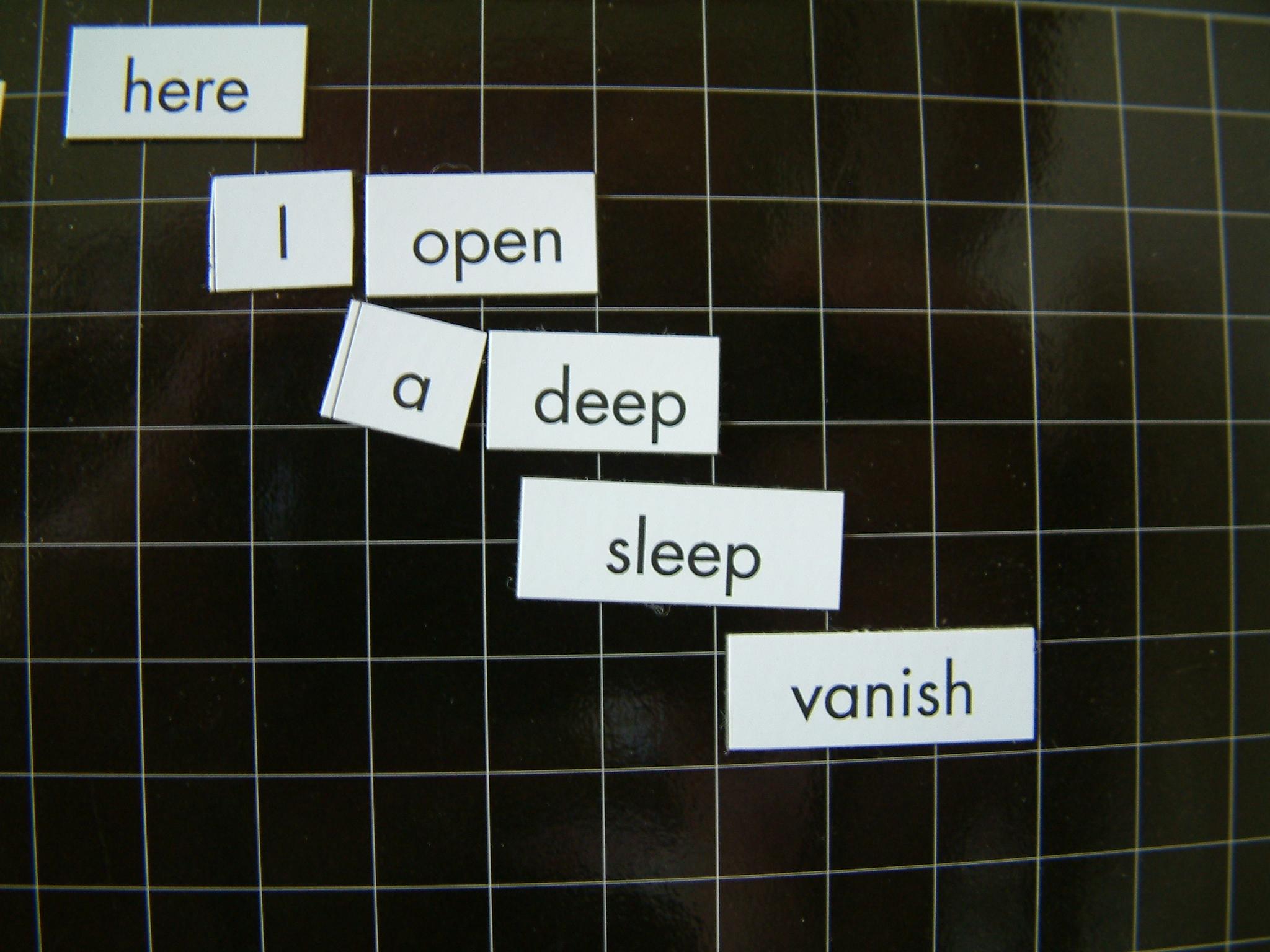
One challenge I love to set for myself is to collect a handful of magnetic letters at random from a box and form a poem. If you haven’t tried this, you should. It’s a great way to explore the inner canyons of your mind. You’ll be surprised at what emerges. These are some of the poems included in my book, “The Story So Far.” It’s available in Amazon paperback and Kindle formats. Or, you can get a signed copy from me by emailing me at david@davidallen.nu.

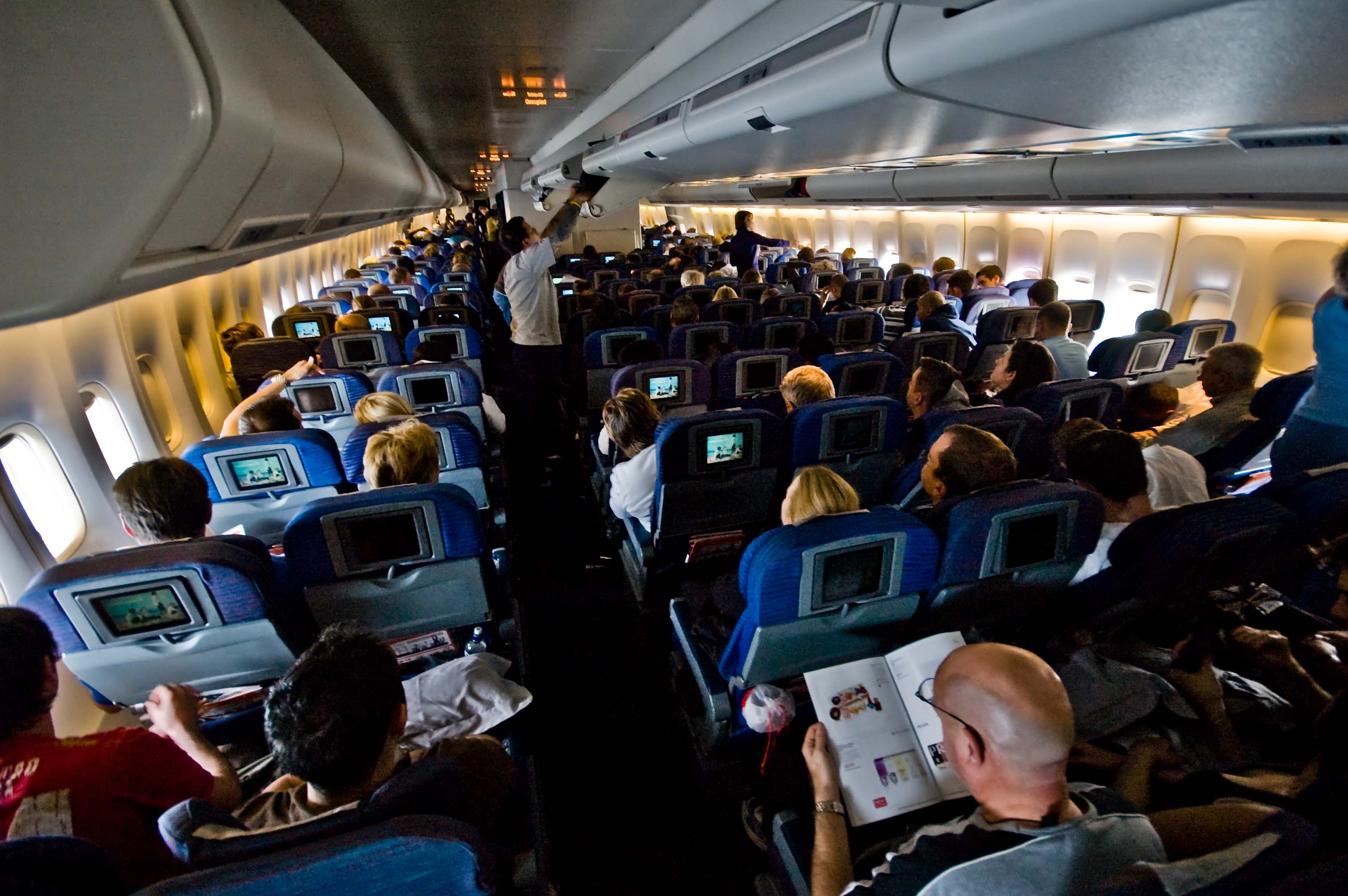
Boing 747 London - Bangkok

SOMEWHERE OVER THE PACIFIC

It takes all kinds
crammed into economy class
on this massive 747
hurtling over the Pacific.
Sleep escapes us,
the evening meal and snacks
are devoured,
the feature films
have played out.
Assigned the window seat,
I have already made my two
seatmates stand
for my trips to the head.
And now,
bored,
sleepless,
I turn on the light
to read some Bukowski:

“lovely women walk by
with big hot hips
and warm buttocks and
tight hot everything
praying to be loved
and I don’t even exist.”

The pretty Filipina
sitting next to me,
her petite body comfortably fitting
into the middle seat,
always has a nice smile
when I pass my trash
to the aisle.
She takes note of me turning on
the light and
slips her glasses carefully
out of a leather case
and draws a book
from the seat pocket.
I take a glance,
the Bible;
she turns to Acts 3,4.
I wonder what she’s reading.

The young Japanese man
in the aisle seat
turns on his light
and opens the latest
edition of Popular Science.
He reads about “What’s New.”

We are all stereotypes —
the dirty old man/poet,
the devout Catholic Filipina,
and the science-minded Japanese —
on our way
to someplace else,
coming from
over there.

COMPARING OUR MEDS

Decades ago
We gathered
And compared
Our favorite drugs,
Which pill sent us soaring,
(“One pill makes you larger,”
The Airplane sang),
And which pill made us retarded?
(“And one pill makes you small?”)
Which pills were discarded
Because they didn’t
Do anything at all?
Flash forward to now
Where we find the balding heads
Sitting on Jim’s back porch,
Listening to him play
Old standards on his squeeze box
While we compare the new pills
That thin our blood
And reduce our cholesterol
And keep our hearts –
And our lives –
On a regular beat.

By David Allen

alcoholic

FINAL NOTE

In his dream he convinced
himself that it was all right
to leave his love alone
for two weeks while
he visited his family
on the tropical paradise,
where he lived before
his retirement and return
to the United States of Discord.

Alcohol clouded their marriage
for a decade, isolating them
from family and friends.

She told him her addiction
was under control,
she had quit after
a near fatal bender.
She swore she was winning
her battle and had stopped
self-medicating in her
war against pain.

So, he left, but was concerned
when his daughter met him
at the airport and his car
was gone from his drive.
The house was dark and
he found a note tacked to the door.

“I choose the booze,” it read.

When he awoke at 7 a.m.
he walked into the living room
were his love lay passed out
on the couch watching TV,
a nearly empty bottle of wine
sat on the chest in front of her.

ROPPONGI

Posted: April 2, 2014 in Poetry, Uncategorized
Tags: , , , ,

IMG_1778

ROPPONGI

One night
while rambling
‘round Roppongi,
taking the tour of Tokyo,
not knowing when
to shun the shots
of sake pressed
upon me by my friends,
down Mogumbo’s
stumbling steps I slipped
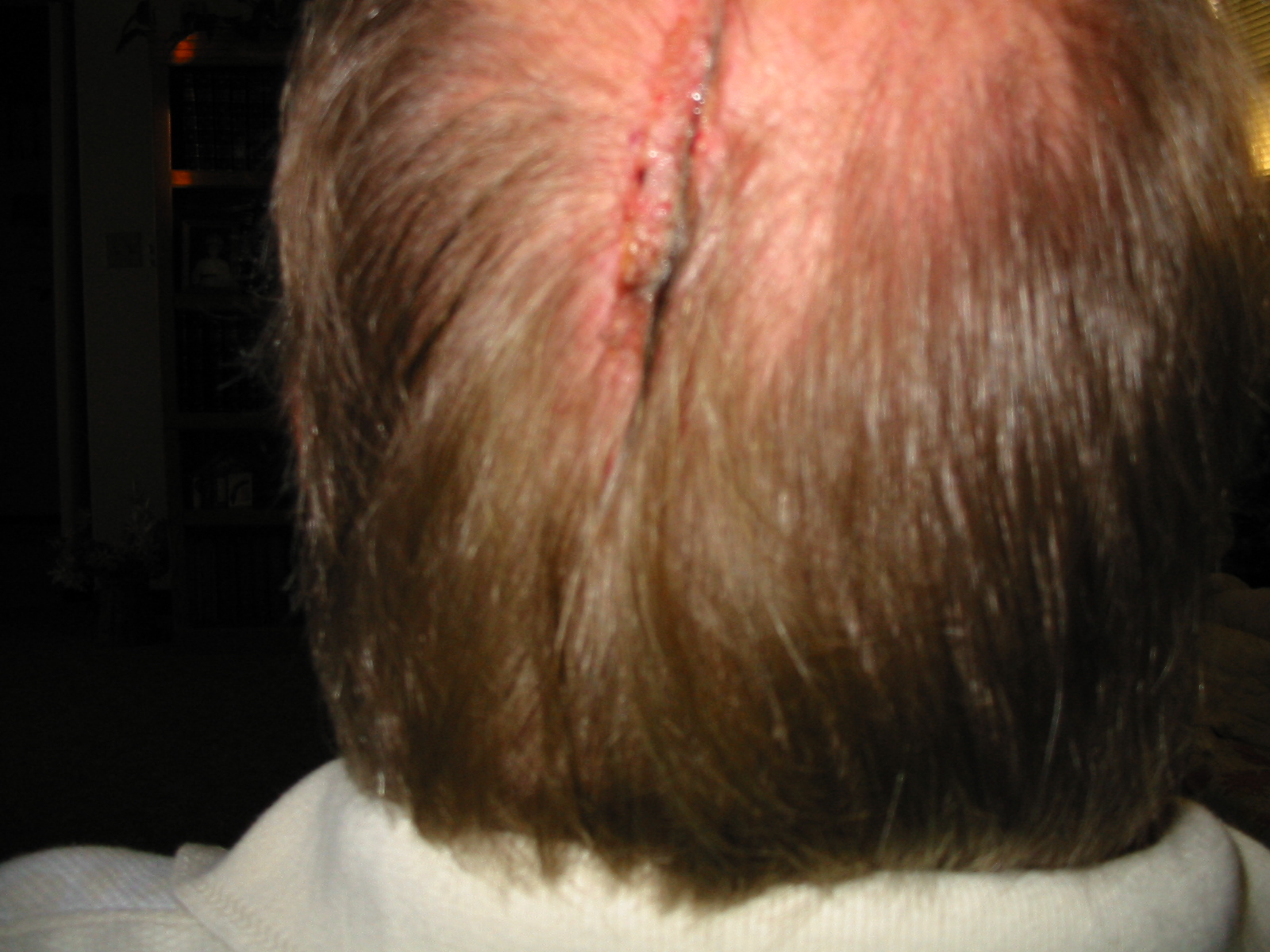
and cracked my head.

Undaunted by
the bloody dent
I descended
to where some kind
soul staunched the flow
with a damp towel,
a ball cap,
and an ice cold brew.

The next morn,
co-workers, aghast
at the scabby slash
that showed through
thinning scalp,
gingerly iodined
and taped the
cut and wondered
why the night’s
itinerary included no trip
to the emergency room.

Why? I asked.
I thought the wet towel
and ball cap
and cold, cold beer
were medicine enough.


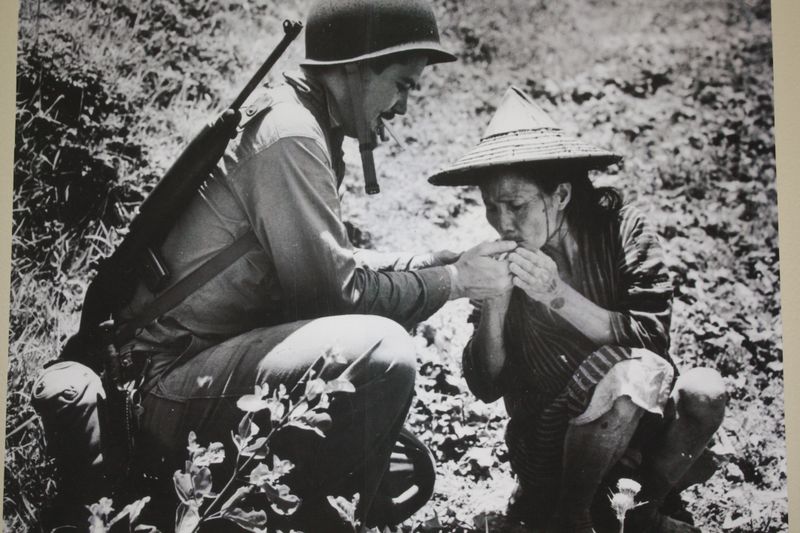
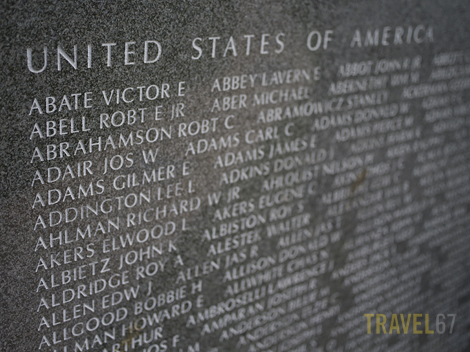
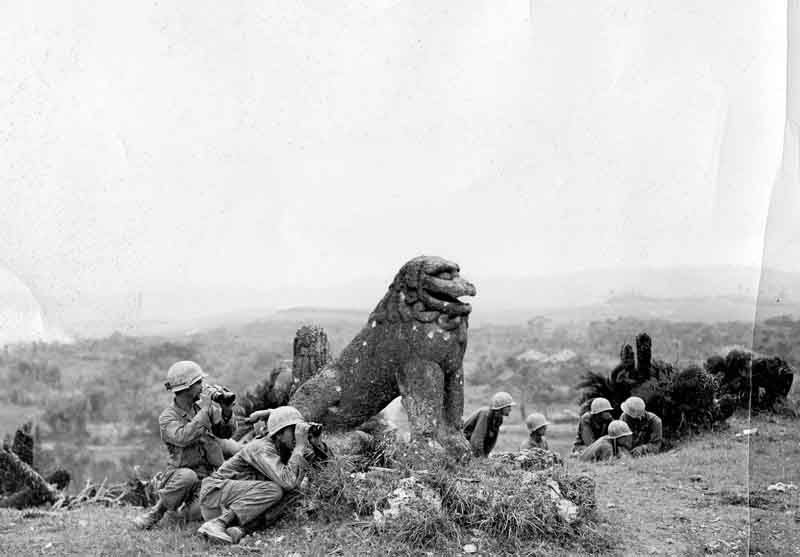
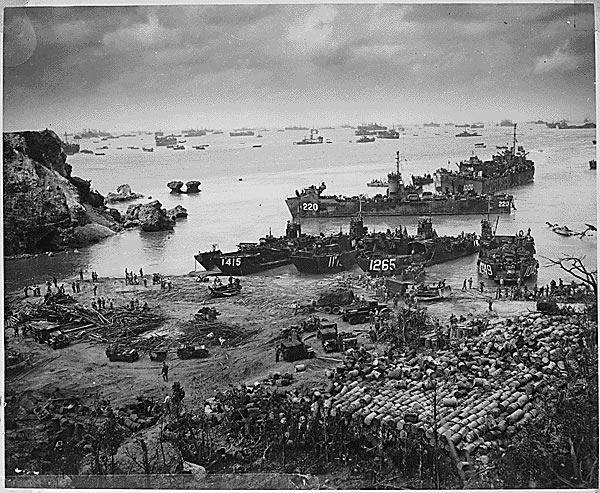
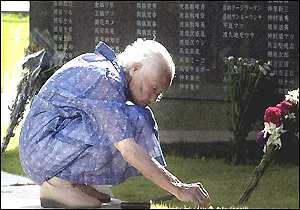
Tuesday, April 1, marks the 69th anniversary of the beginning of the Battle of Okinawa, the last and bloodiest battle in the Pacific during World War 11. Here’s a poem I wrote about the battle while covering the 50th anniversary events on Okinawa when I was the news bureau chief for Stars and Stripes.

6a00e54ee8a8ff883301287578d935970c-800wi

6453231-blog

aaa002W

images

Landing 2

payingrespects.okamemorial

THE NAMES

George Allen White Jr.,
Edward Lewis White,
James White…

Names,
American Marines who died on Okinawa.
These names are read in June,
in April the names were soldiers,
May was for sailors.

Names
every day.

On April 1,
the reading of the names began
to commemorate
April Fool’s Day,
Easter Sunday,
Love Day,
the day the Americans invaded Okinawa,
struck back on Japan’s home soil
in 1945.

Every day
for an hour at lunch
and in the evening
they came to read the names
at a church high on a hill
overlooking the invasion beaches.
A church with American and Japanese parishioners,
with a Japanese-Canadian priest,
who spent his war in a cold Saskatchewan internment camp.
Every day
they come to
All Souls Episcopal Church
to read the names of the souls
lost.

James Preston White,
James Thomas White,
Jerry Wilson White…

They are coming to the end.
Eighty-three days,
each day of the battle.
Returning veterans,
some with wives and grown children,
sit in the back of the chapel.
Silent.
Respectful.

Thousands of names.
12,281 Americans,
110,000 Japanese soldiers and Okinawan conscripts,
More than 150,000 Okinawa civilians.

Logan Willard White Jr.,
Thomas George White,
Charles Edward Whiteman…

Each name another soldier,
sailor, aviator, civilian
killed in the carnage that was
the Battle of Okinawa.

Listen –

James Richard Whiteman,
Mark Edward Whiteman,
Forrest Whitt,
Joseph Henry Whitaker…

Whisper them softly,
fall into the rhythm.
it’s a Jewish Kaddish,
a Buddhist chant,
a Christian prayer.
Meditate.

Joseph Henry Whittaker,
Marvin Jones Wiggins,
William Robert Wiggins…

Name after name.
Each man some mother’s son,
some father’s pride.
this one the class clown;
that one the brain.

Some were orphans,
no family except their platoon
or shipmates.
That guy was a Gary steelworker,
and wasn’t little Jimmy Whit
the mechanic down at the corner garage?

And what of the names read
on other days?

David Bond,
Earl Graham,
Ernie Pyle…

Wait, that one’s familiar.
Pyle, a newspaperman,
he wrote about these people,
always making sure he got the names right.
Thousands of names for the readers back home,
’til a Japanese sniper reaped his name
for the book of the fallen.

All-American names
like,
Howard S. Shwartz,
Louis Odachowski,
Kazuyoshi Inouye.

Some of the veterans are uneasy
on the wooden church pews,
it’s hard to sit through.
The reader’s voice is hoarse,
so many names.

Robert Wiggins,
Gray Huntley Whitman,
Hugh Whitington…

So many names.
Names inscribed on a striking monument
on Mabuni Hill, where the Japanese Army
made its last stand.
The Cornerstones of Peace,
the names of the dead from all the countries,
carved into 1,200 black granite walls,
stretching to the sea
like the wings of doves.

Donald James Wilton,
Kenneth William Wilkins,
Jack Williard…

The American list is over for the day.
the veterans leave,
handkerchiefs pat at moist eyes.
Few remain in the chapel
as a new reader sits at the table.
She begins to read.

Sato Yoshiro,
Yasuoka Tomohiko,
Murakami Minoru…

More names.
These are Japanese,
a college conscript from Tokyo,
a farmer from Hokkaido.
soldiers in the Emperor’s Army on Okinawa
when the Americans came with their
Typhoon of Steel.

Pak Man-do,
Chou Che-jiu,
Song Yong…

Korean names,
forced laborers,
comfort women.

Masahiro Kohagura,
Masao Ota,
Kiyo Yamashiro…

Okinawa names,
Page after page.
It sometimes takes 10 minutes
to read the day’s American names,
maybe 25 minutes for the Japanese,
much longer for the Okinawans.
That name belonged to a fisherman from Kin.
And wasn’t that the name of the mother from Itoman
who huddled in fear
at the rear of a deep cave with her two children,
shivering with fright as death came calling,
collecting his names?

Grandfathers,
babies,
teenage girls pressed into service to tend
the wounded.
Whole families of names,
each a sad reminder of War’s toll;
each name a testament.
To what?

Life.
This person once lived.
“I existed,
I had a name,
I was somebody.”

Read our names,
remember us.

HER LEGS

Posted: March 29, 2014 in Poetry
Tags: , ,

Poetry

HER LEGS

Her legs go
all the way
up.

That’s all
you need
to know.

shopping cart


DEATH OF A GROCEY CART

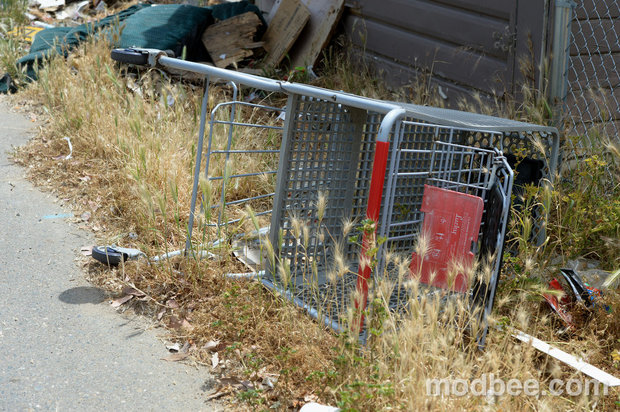
Is this the end, stuck
In a muddy, smelly streamlet
At the bottom of a hill?
I can hear traffic on the road above
And sense the occasional pedestrian
Striding down the sidewalk.
I don’t think they can see me
Lying on my side, rusting,
A bit banged up, missing a wheel.

It wasn’t always like this.
Not too long ago I was popular,
Busy with my fellow carts
At the local supermarket,
Gliding down the aisles
On well oiled wheels,
Shiny and new, proudly
Accepting the groceries
Placed in my basket,
Giving children a safe ride.
Why, once I even had my picture taken
When I spent two hours slowly rolling
In front of a woman carefully checking
Her coupons until she bought $500
Worth of goods for $35.

But things took a turn for the worst
One night when one of the bag boys
Gathering carts in the parking lot
Missed me – I was hidden by a parked van
At the far end – and I spent a cold night
Shivering and lonely.
The next day, some kids found me.
Two of them sat in my basket while another
Pushed as fast as he could, making
Dangerous turns and nearly toppling me over.
Then they found one of my brother carts
And played demolition derby with us.
I hated smashing into him, but
I had no choice.

Later, they abandoned me
Next to a large trash bin behind
The market, where a homeless man,
Dumpster diving late one night,
Filled me with his belongings;
Bent cans, rotting produce and
Cardboard boxes and newspapers
That would serve as his bed under a highway bridge.

His name was Moe and I was with him for a long time,
Pushed down the backstreets during the day,
While he collected bottles and cans to cash in
For some booze at the local liquor store;
Sometimes parked me outside the Mission
While he copped a free meal.
But mostly, we spent the time scouting
New dumpsters to scour.

I started to deteriorate, rust,
My right front wheel trembled,
Sometimes shaking uncontrollably.
And then one day, while pushing me
Slowly along the sidewalk
That now seems to tower so far above me,
Moe stumbled and fell and
With one last push I tumbled down the hill.
I heard sirens and never heard from Moe again.

I hope he’s all right.
I enjoyed the nights with him and his friends,
Getting drunk on bottles of cheap wine,
Listening to their stories of past adventures.
I really miss those times,
Maybe even more than
My grocery glory days.
I loved being able to travel, see new sights,
Belong to somebody.
I wonder what’s next.
Is this really the end?

By David Allen

My interview for my Stars and Stripes story about the 40th anniversary of Woodstock. At the time (summer 2009) I ran the Okinawa News Bureau for the daily newspaper. Now I am retired and living in Central Indiana. I can’t stand the goddamn cold!